Marion’s written account
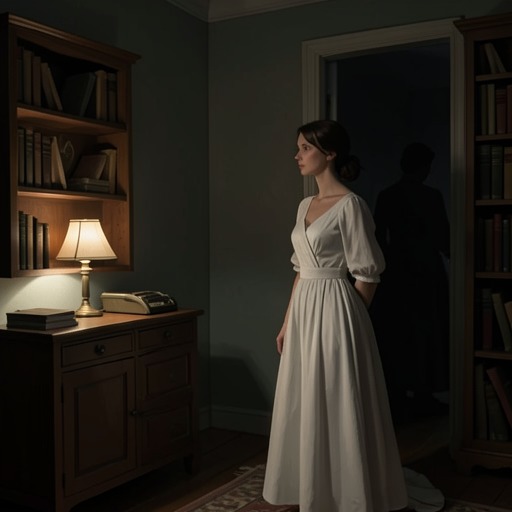
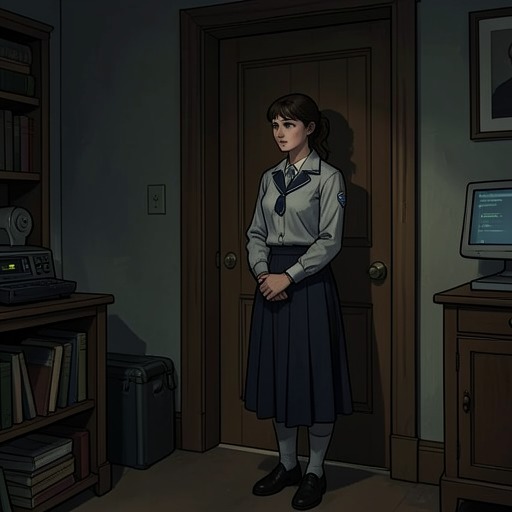
My PolicemanMarion Burgess’s written account is a confession-like narrative she begins in Peacehaven in October 1999, while caring for Patrick Hazlewood after his speech has been almost destroyed. She intends to read it to him because doctors have stressed the importance of talking during his recovery, but the account also serves her own need to remember. Its defining tension is between the promise of telling the truth and Marion’s growing uncertainty that she will be able to share what she writes.
Form and Purpose
Marion begins by considering how to address Patrick, then rejects an opening she thinks would be too melodramatic and upsetting given his condition. This choice establishes the account’s careful, self-conscious manner: she wants to be truthful, but also attentive to what Patrick can bear. She describes the writing as a confession of sorts and says that getting the details right matters. The project is therefore not simply recollection; it is an effort to arrange and verify what happened before attempting to communicate it to someone who can no longer answer in speech.
The account is addressed to Patrick, but its purpose is not confined to him. Marion says she is writing about her relationship with Tom Burgess and the surrounding events, and recognizes that the part she calls the everything else will become harder to set down. As she writes, however, she finds herself taking pleasure in the work and including matters that may not interest Patrick. She wants to remember the whole of it for herself as well. The narrative thus develops two audiences: the man she hopes will hear it and the writer who needs the act of remembering for her own sake.
Writing Alongside Care
The account takes shape within the practical routines of Patrick’s care. Although he is in Marion’s house, they communicate through flashcards: he points to images for basic needs such as a drink, the lavatory, or a sandwich. Marion says she often knows what he wants before he points, but lets him indicate it himself so that he can retain some independence. The paper on which his gestures are made and the paper on which she writes belong to the same altered means of communication, though they serve different purposes. One enables Patrick to express immediate needs; the other gives Marion a way to address the history they share.
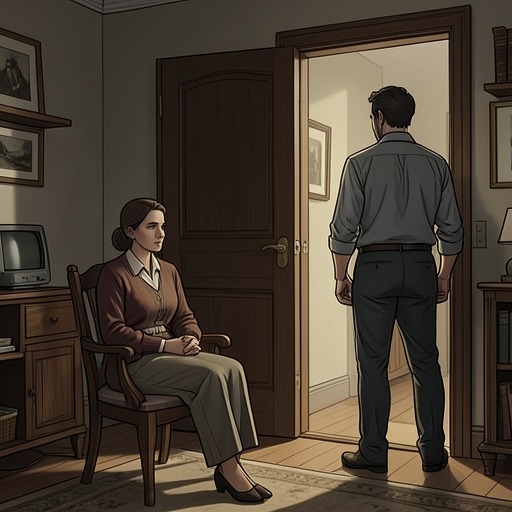
That difference is sharpened by the arrangement of their present roles. Patrick lies in bed and watches Marion write; she holds the pen and paper, while his capacity to respond has been greatly reduced. She reflects that this is an inversion of their earlier relation to writing, since Patrick once kept a journal. The account is not that journal, and Marion does not claim its authority or form. Instead, the change in who can write becomes part of the story: the person who formerly recorded his life is now the listener for someone else’s account, while the person writing cannot be sure he will ever be able to answer it.
Memory, Time, and Hesitation
Marion’s writing gives her days a purpose she says she has not felt since retiring from the school. That renewed purpose does not mean the account is easy to complete. She initially presents reading it aloud as her plan, then admits that the closer she comes to the most difficult subject, the less likely she thinks she is to follow through. The act of writing therefore advances while the intended act of disclosure recedes. Readers encounter the narrative in the space between those two possibilities: a record being made, and a conversation that may not happen.
The account also places its immediate present in a particular landscape. In Peacehaven, Marion describes repeated streets of modest bungalows, functional gardens, and angled views of the sea. Patrick dislikes the coast and its uniformity, while Marion finds some comfort in the predictability of the surroundings. This settled, repetitive setting contrasts with the unsettled work of recollection. The account is composed in a recognizable everyday present, yet its subject reaches back through Marion’s relationship with Tom and toward matters she has not yet found the courage to read aloud.
An Unfinished Act of Address
Marion’s account remains deliberately provisional in its opening sections. She has begun writing, has identified the relationship she means to explain, and has acknowledged that the central material will be difficult; she has not established that Patrick will hear the completed narrative. Her uncertainty is not a minor interruption to the project but one of its governing conditions. The written text can proceed without his spoken reply, whereas reading it aloud would expose Marion to the possibility of having to confront the account in his presence.
The title’s possessive form points toward a personal testimony, but the text complicates the idea of a story controlled by a single speaker. Marion addresses Patrick, considers his preferences and condition, and writes for herself as well as for him. Meanwhile, his gestures, his watching, and his inability to answer shape the situation in which the narrative is produced. The account is at once a record of the past, a practice of keeping communication open in the present, and an uncertain preparation for disclosure. Its significance lies in that unresolved movement from private writing toward speech.